

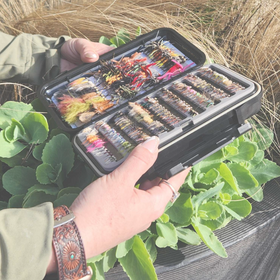
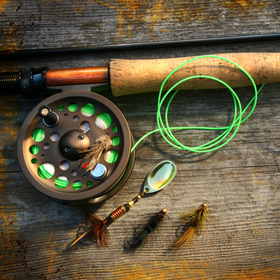
Multi-fly riggings have gained popularity in trout fishing. The ability to cover multiple depths of water, search with different patterns or use a dry fly with a sub-surface pattern, have resulted in more fish and less trial and error. Multiple flies allows you to pinpoint what is working or just (depending on the quantity of flies) doubles, triples or even quadruples your chances of catching fish, for whatever reason though this simple probability equation has not very often transferred to the salt water venue.
Granted there are some separate drawbacks to multiple flies in the salt. Compared to fresh water, the ocean has a labyrinth of considerations to ponder tides, more varied species of food, currents that are often at odds and variable. A quick and careless entry into multi-fly-rigs could easily result in an exercise of tangled frustrations. Care and planning must be used.
In the beginning easier casting can be had by tying flies directly to one another and limiting your rigging to two flies.
The best starting point involves a top water popper with a trailing sub-surface pattern around two feet (depending on water) below it. The popper stays on the surface acts as an attractor and if your dropper is accurate will result in more strikes. If no strikes are coming you see no chasers or nippers, a simple change of dropper and re-cast and you’re back to prospecting. When changing go for a big change, if using a shrimp, try a minnow or a bucktail, keep zeroing in on what might be working. As compared to freshwater, saltwater activity can change drastically from where you are standing to where you flies are working. So clues by searching the water around you, while a good starting point, might prove unhelpful.
Casting and stripping must be done with increased consideration at first. Slowing everything down will help you get the hang of the technique. Cutting down on frustration relies on slowing down your casting motion, opening up the loop, and hefting the extra weight, and letting it follow through, to lay out over the water. Avoid currents in crises, and find some easy to read water to swing your files through, Strip in rhythm and repeat. Stiff leader material like Maxima, also helps reduce tangles.
Once you feel comfortable add a fly or two to your rig. Or try attaching flies to tag ends on your leader for independent action. In this set up large flies are at the end of you set-up and flies are tied at 90 degrees angles to the leader using a blood knot. This rigging is not conducive to heavy flies, or flies that vary greatly in size. Many people stick their whole fishing days with tying their files in a line.